
Across Europe, the WELDNET project is working on an ambitious goal: to rethink how skills, training and innovation come together in the welding, materials processing and circular manufacturing sectors. Instead of treating training centres as isolated institutions, WELDNET aims to build living, supportive and future-oriented Skills Ecosystems, where VET schools, companies, researchers and local communities learn and grow together.
To do this, the project will organise five foresight workshops,one in each participating country, where partners, industry representatives and policy makers imagine what the future of these sectors might look like. These sessions, coordinated by HELIX and held online using collaborative tools, will bring together more than 100 people. The goal is simple: to understand what skills people will need in the coming years and how COVEs can prepare them.
Each country will build its own COVE “node” using the facilities it already has. These include:
• Greece: CERTH Labs
• Spain: CESOL & FEMEVAL training spaces
• Austria: TU Wien’s PF4.0 Lab and Academy for Continuing Education
• Romania: ISIM’s materials processing lab
• Serbia: MINDPARK & SSSKG training spaces
These places will act as local hubs where trainers, students, companies and innovators can work together, use modern equipment and contribute to shaping a shared European vision.
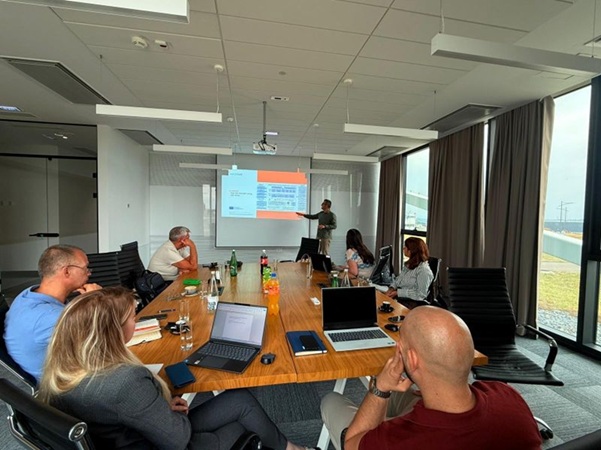
In recent months, the project has already taken its first steps. In Austria, TU Wien hosted a meeting with EIT Manufacturing and the HELIX team to bring national actors into the conversation. Around the same time, in Serbia, key stakeholders gathered to kick off their country-level process. These early meetings show strong motivation and local commitment, essential for building meaningful ecosystems.
As WELDNET moves forward, everything learned in the five workshops will help create a clear blueprint for the future of COVEs in Europe. The ambition is not only to modernise training, but to build communities where people feel supported, connected and ready for the challenges of a fast-changing world.